Month-End Close for Accounting Firms: How to Clear Review Queues Faster

Accounting firms do not lose time at month-end because reports are hard to generate. They lose time because the review queue never gets clean enough for anyone to trust the numbers.
That is why the best month-end close workflow is not “review everything manually.” It is “clear the exceptions fast, trust the system for the obvious items, and move from transactions to reports without context switching all day.” Wesley is built for exactly that workflow.
If your team is trying to close faster, reduce review fatigue, and get to a clean P&L and balance sheet without dragging the process across multiple tools, this is the workflow to copy.
Why month-end close gets stuck
Most accounting firms already know the real bottleneck:
- Too many transactions still need categorization.
- Reviewers keep reopening the same clients because the queue never meaningfully shrinks.
- By the time someone opens the P&L, they still do not trust the underlying detail.
- Balance sheet review gets delayed because the transaction layer is still messy.
The result is a close process that feels sequential, manual, and fragile.
Wesley is useful here because it compresses those steps. Your team can move from transaction cleanup to report review inside one workflow instead of stitching the month-end close together manually.
Choose your workflow
Tax workflow hub
The full cluster for W-9 collection, 1099 review, and filing-season cleanup workflows.
Collect a W-9 before filing a 1099
The cleanest timing and follow-up workflow before filing season turns reactive.
1099-K vs 1099-NEC
How to separate processor-reported payments from contractor compensation.
Why a contractor is missing from your QuickBooks 1099
A practical troubleshooting flow for inactive vendors, thresholds, and mapping issues.
Why credit card payments do not show up on 1099s
The exact reporting logic behind excluded card and payment-app transactions.
Coverage and resources
Open the authority pages that support this workflow.
Month-End Close Request Checklist for Accounting Firms
A practical month-end close request checklist you can send to clients so statements, loan docs, payroll reports, and exception support arrive before the close starts.
Open page →
Bank Statement Cleanup SOP for Bookkeepers
A bank statement cleanup SOP for bookkeepers who need a repeatable review process before exporting to QuickBooks, Xero, QIF, or spreadsheet workflows.
Open page →
Step 1: clear the transactions that actually matter
At month-end, the goal is not to stare at every line. The goal is to get the queue into a state where the remaining work is obvious.
Wesley automatically categorizes most recurring and recognizable transactions with high consistency, so reviewers spend their time on the exceptions instead of the routine items. That changes the shape of the review queue immediately.
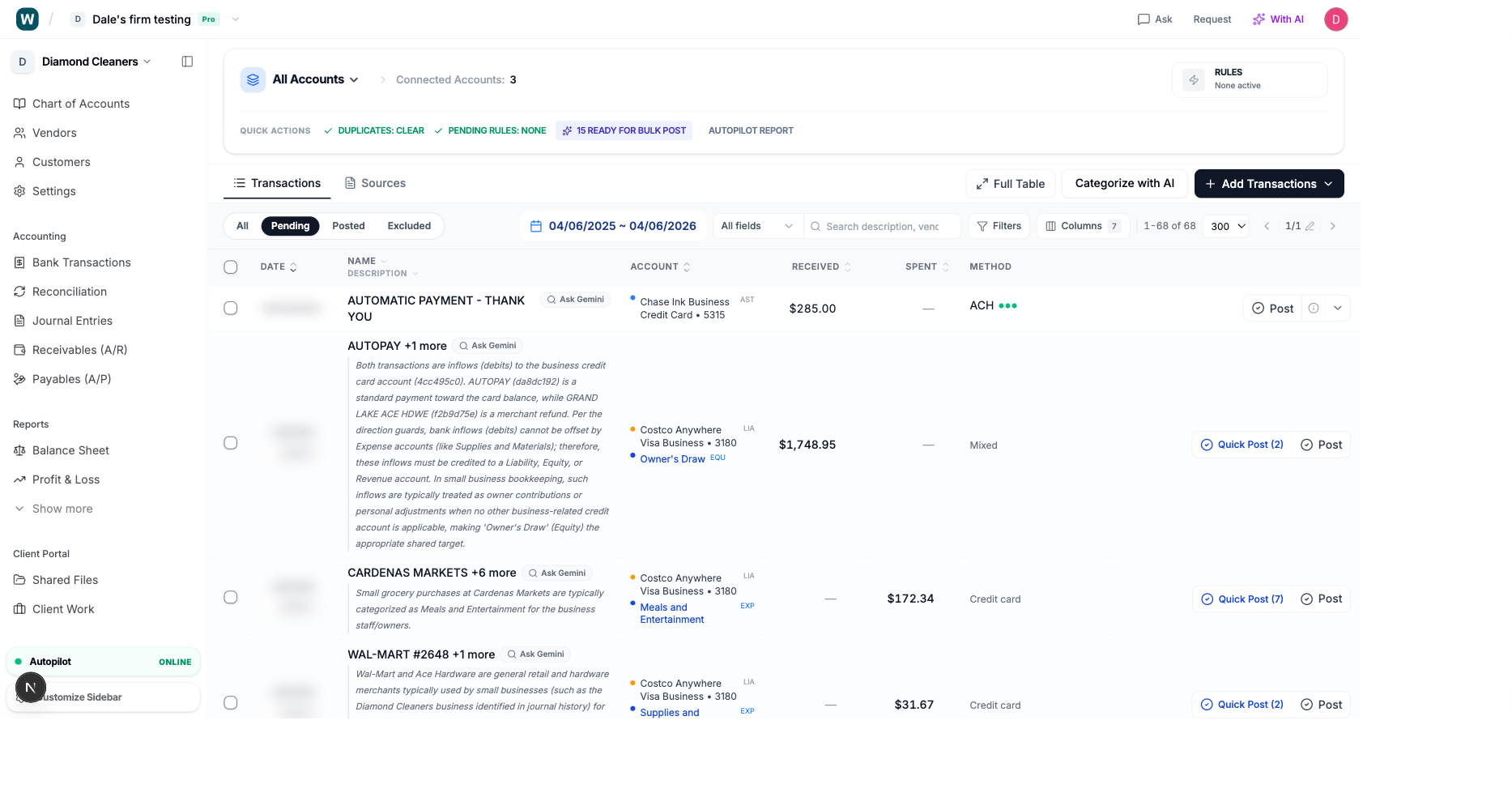
This is one of the biggest differences between a slow close and a fast one. In a manual process, every transaction feels like work. In Wesley, the system handles the easy pattern-matching first so your team can focus on judgment, not repetition.
Step 2: move to the P&L earlier, not later
Once the noisy part of the queue is reduced, you can review the P&L sooner and with better confidence.
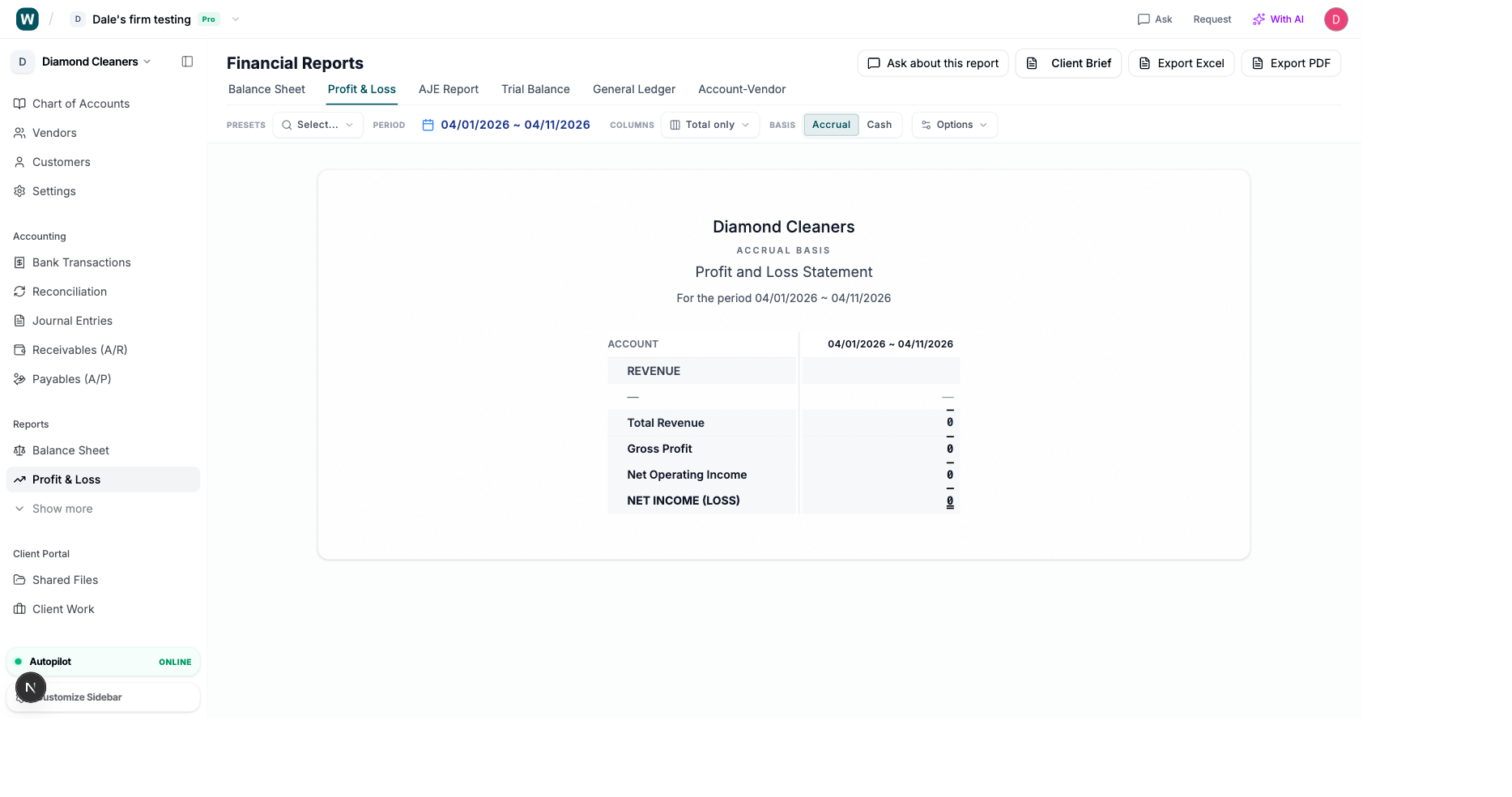
This matters because a strong month-end close is not just about booking transactions. It is about getting to an income statement that supports partner review, client communication, and tax planning faster. Wesley helps teams get there earlier by shrinking the uncertainty before report review starts.
Step 3: use the balance sheet as a final trust check
A lot of teams treat the balance sheet like a separate cleanup project. That usually means close takes longer than it should.
A better workflow is to clean the transaction layer, review the P&L, and then use the balance sheet as the final check that the books are actually ready.
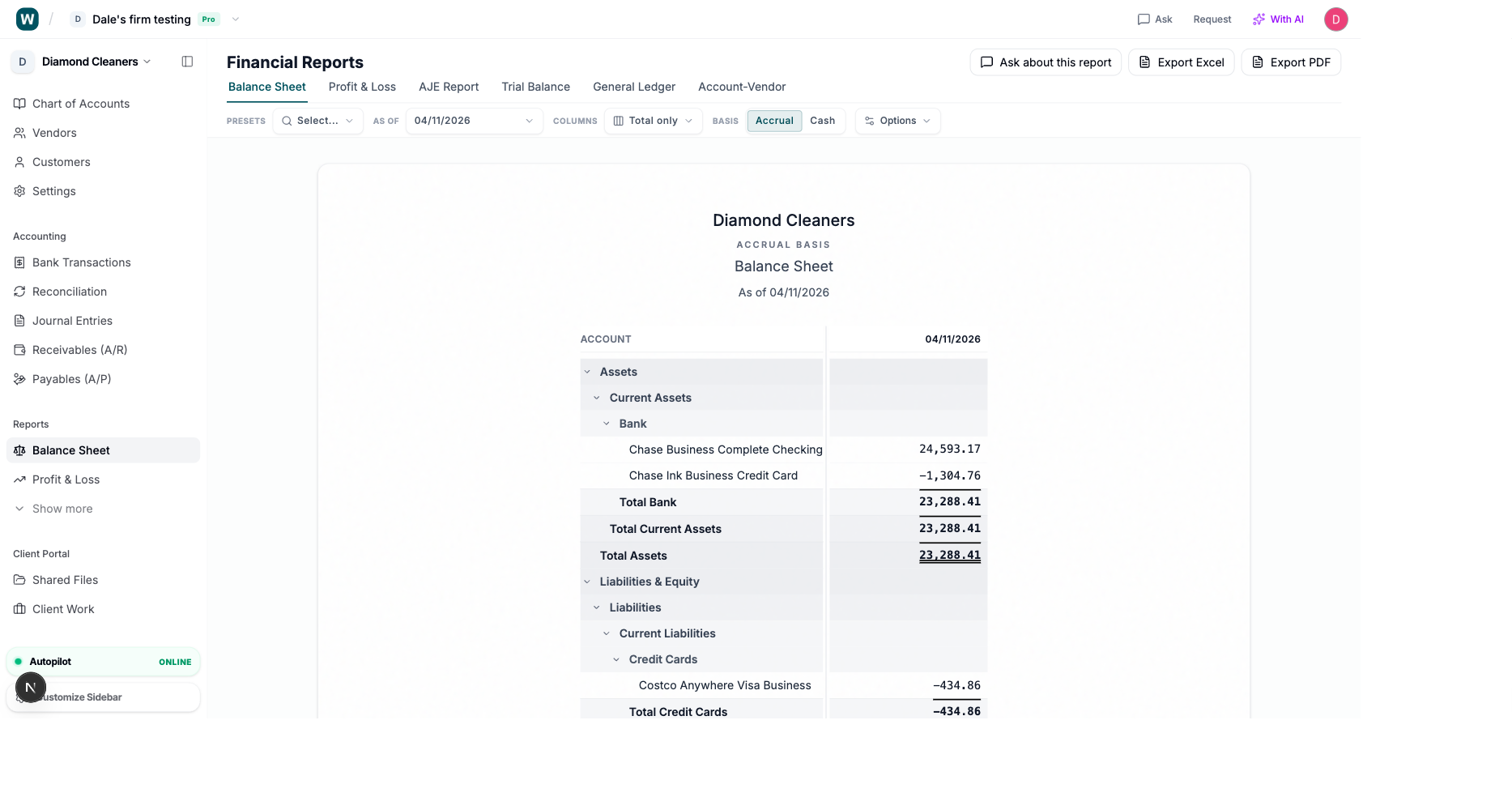
Because Wesley keeps the cleanup and reporting workflow connected, reviewers do not have to rebuild context every time they switch screens. That makes it much easier to spot what is genuinely unresolved versus what is already good enough to close.
What this changes for accounting firms
When firms tighten month-end close in Wesley, the operational gains are usually straightforward:
- reviewers stop spending their best time on already-obvious categorization work
- managers can look at reports earlier in the cycle
- the review queue becomes smaller and more explainable
- month-end close feels more like exception handling than bookkeeping triage
That is the underlying leverage. Wesley does not just help generate reports. It helps your team arrive at trustworthy reports with less review drag.
Final takeaway
If your current process for month-end close still depends on working line by line until the numbers finally feel usable, the process is doing too much manual work too late.
The faster approach is to let software handle the consistent transaction categorization, clear the real exceptions first, and move into P&L and balance sheet review while the close is still moving.
That is exactly where Wesley fits. It gives accounting firms a cleaner path from transaction review to month-end reporting without the usual queue sprawl.
Build a calmer filing workflow
Keep contractor docs, payment exceptions, and follow-ups tied to the actual work
Wesley is strongest when the filing problem is really a workflow problem: missing documents, unclear payment channels, and last-minute cleanup before you can trust the numbers.
Related reads
Discover adjacent articles without being sent to near-duplicate topics.